Applied AI
Make the AI Show Its Working: A Fact-Check Prompt for Supplier Research
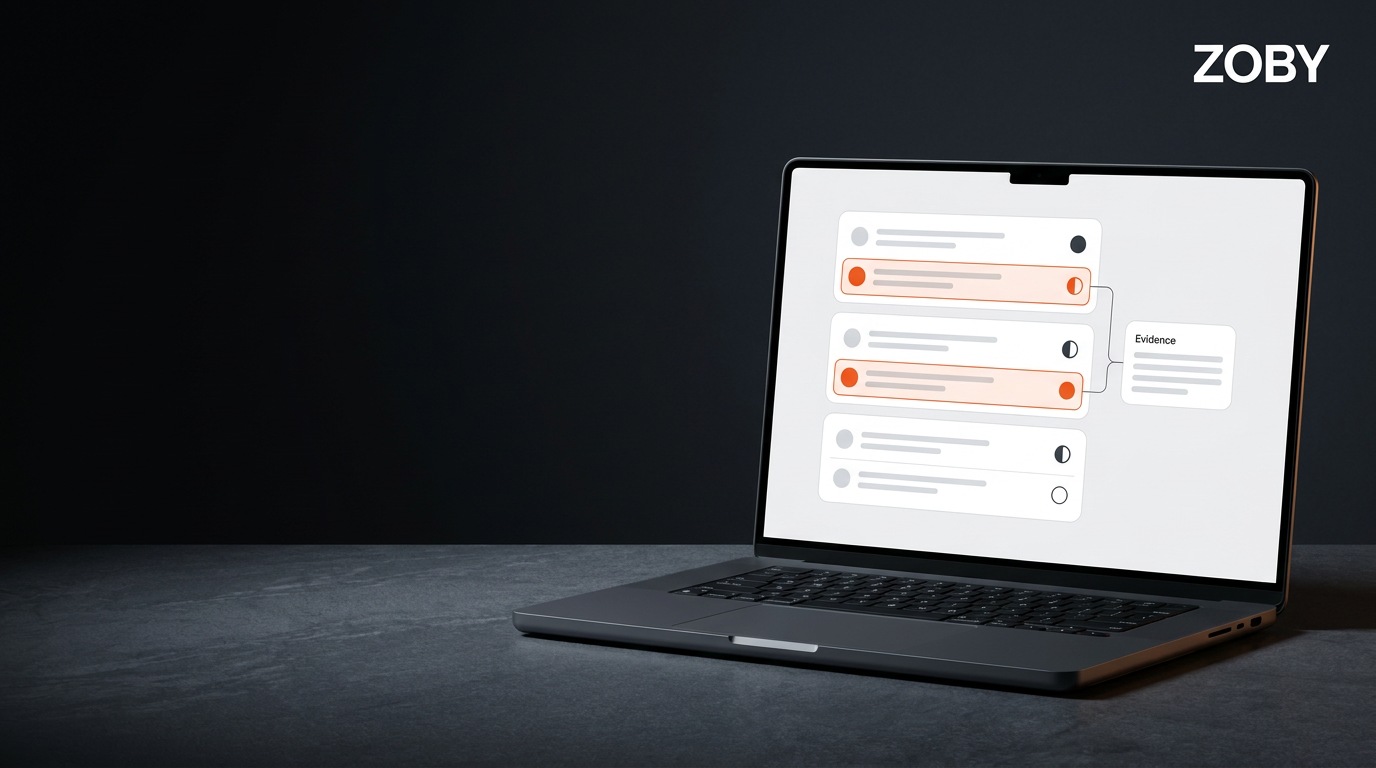
AI assistants will hand you a confident supplier shortlist with lead times, fees and minimum numbers that do not exist. The fix is not trusting it less, it is a prompt that separates what it knows from what it is guessing.
The shortlist that looks perfect
Ask an AI assistant for a shortlist of suppliers with a particular spec, in a particular region, for a particular date, and it will give you one. Clean formatting, sensible-sounding company names, specific numbers for lead times, minimum order sizes and fees. It reads exactly like something a well briefed junior researcher would produce after a morning of proper digging.
The trouble is that some of it is invented. Not maliciously, and not randomly either. AI assistants are built to produce a fluent, complete-sounding answer, and a shortlist with a gap in it does not feel complete. So where the model does not actually know an AV hire lead time or a current catering minimum, it will often produce a plausible one anyway, in exactly the same confident tone as the facts it does know. Nothing in the output tells you which is which.
The fix is not "trust it less"
Telling people to simply double check everything is true but not useful advice on its own, because it does not tell you what to check hardest or where the risk actually sits. What works better is changing what you ask for in the first place.
Instead of asking for a shortlist, ask for a shortlist that shows its working: what it is confident about, what it is inferring, and what it is genuinely unsure of. Once the AI is forced to separate those categories, the guessed numbers stop hiding inside the real ones, and you get a usable checklist of exactly what a human needs to verify before anything goes near a client.
The prompt
Paste this into ChatGPT, Claude, Copilot, whichever you use, followed by your research request or an existing shortlist you want checked. Expect a table-style breakdown of each supplier with a confidence label on every claim, plus a short verification list at the end.
You are helping with supplier and logistics research for an event. I will give you either a research brief or an existing shortlist. For every supplier you include, and for every specific claim about it, label your confidence honestly rather than presenting everything in the same tone.

Use exactly these three labels for every factual claim (lead times, minimum numbers, fees, room-block terms, travel or transfer times, build and freight schedules, dietary or accessibility provision, contact details, anything specific):

KNOWN: something you are confident is accurate and current, based on well established, widely available information.
LIKELY: a reasonable inference, for example an AV hire lead time estimated from typical industry turnaround, or a catering minimum typical for that type of supplier, that has not been directly confirmed.
UNVERIFIED: anything you are not confident about, including anything that could plausibly have changed recently, such as day rates or fees, current minimum numbers, hotel room-block cancellation terms, or whether a supplier still operates the way described.

Format the output like this for each supplier:

Name:
Category: [AV, catering, transport, accommodation, speaker or entertainment, freight and build, other]
Lead time or minimum notice: [figure] - [KNOWN/LIKELY/UNVERIFIED]
Minimum numbers or order size: [figure] - [KNOWN/LIKELY/UNVERIFIED]
Indicative fee or day rate: [figure or range] - [KNOWN/LIKELY/UNVERIFIED]
Key terms: [dietary handling, accessibility provision, room-block cut-off, transfer or travel time between sites, freight and build window, whichever apply] - [KNOWN/LIKELY/UNVERIFIED]
Notes: anything relevant about why a figure is uncertain

Then produce a final section titled "Before this goes to a client," listing every UNVERIFIED and LIKELY item across the whole shortlist as a plain checklist, in the order a human should work through them, fastest and most important first.

Do not remove or soften an UNVERIFIED label to make the shortlist look more complete. An honest gap is more useful than a confident guess.

Here is my research request or shortlist:
[paste here]
Reading the output properly
The value of this prompt is entirely in that final checklist. Ignore it and you have simply asked the AI to hallucinate with better formatting. Use it properly and you get a short, specific list of exactly which phone calls or website checks need to happen before anything goes to a client, rather than a vague sense that you should "probably double check some of this."
In practice, fees and lead times are the two categories that come back UNVERIFIED most often, which lines up with reality: those are exactly the two things most likely to have changed since whatever the model last learned about a supplier. Room-block cancellation terms and freight or build windows are close behind, because they are the details that live in a contract rather than on a website.
What a human still has to do
This prompt does not remove the verification step. It makes the verification step small, specific and honest, instead of a vague feeling that you should check "some of this at some point," which in practice tends to mean nothing gets checked at all until something goes wrong.
Treat every KNOWN label with a little scepticism too. It means the model is confident, not that the model is correct. A quick call to the supplier, or a look at their own current terms, is still worth doing for anything that is actually going in front of a client, whatever label it carries. A transfer time between sites that looked fine in the shortlist can fall apart the moment you check it against an actual timetable rather than a straight-line estimate.
This matters most when the shortlist is going somewhere fast: a same-day enquiry, a build schedule due first thing tomorrow, a client who wants three catering options by lunchtime. Pressure is exactly when an unverified figure quietly becomes a stated fact, because nobody had the ten minutes it would have taken to check it. A short, honest checklist is easier to act on under pressure than a long, tidy shortlist that is hiding its gaps.
Make this part of the routine
Build this into how you do supplier and logistics research generally, not just for one big pitch. It takes the same amount of time as asking for a plain shortlist, and it hands you the checklist as a byproduct instead of leaving you to guess where the risk is hiding.
More prompts like this, tested on real events work, are collected at Zoby OS.