Industry Signals
What Confex Told Me About Where the Industry Actually Is with AI
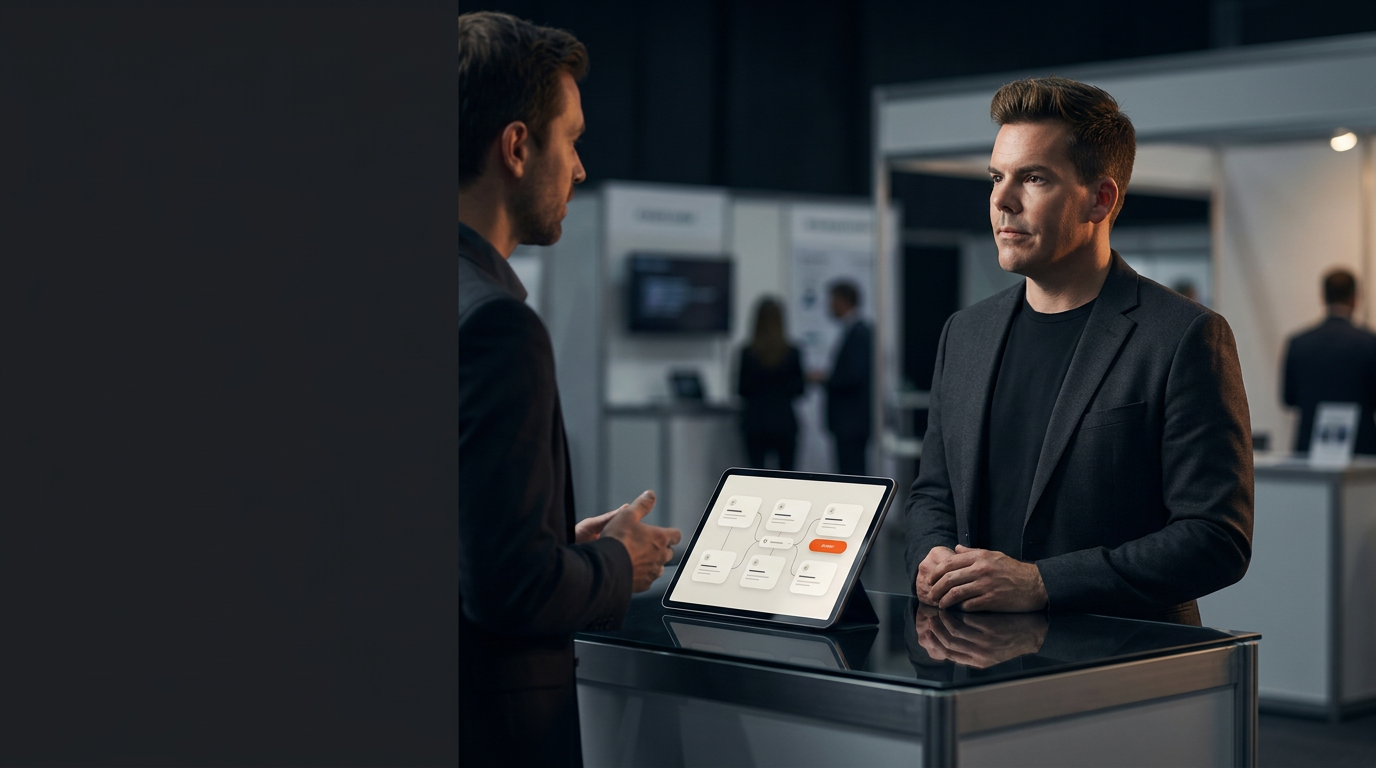
I spent two days walking the floor at International Confex. Half the stands had AI written on them. Almost none of the interesting conversations were about AI at all, they were about data.
A month later, still thinking about the floor at ExCeL
I was at International Confex at the end of February, two days on the show floor at ExCeL, over three hundred suppliers, ten content theatres running back to back. It has taken me a few weeks to work out what actually stuck, rather than what I noticed in the moment.
What stuck wasn't a product. It was a pattern.
Every second stand had AI on it. Most of them meant the same thing
Walk the aisles and you'd think the whole industry had transformed overnight. AI powered this, AI enabled that, a chatbot avatar on more screens than I could count. Scratch the surface on most of them and the story was thinner than the banner: they had added a chatbot to an existing product, pointed it at their own FAQ, and called it AI.
That's not nothing. A well built chatbot saves someone a phone call. But it's a feature, not a transformation, and the stand graphics didn't always know the difference.
The interesting conversations weren't about AI, they were about data
The stands that actually held my attention were the ones where the sales conversation kept sliding sideways into something else: where does the data live, who owns it, what happens to it if we leave.
I heard a version of "where does our data go" more times in two days than I've heard it in the previous two years on a show floor. That's a genuinely new question for this industry to be asking suppliers out loud, and it's a better question than "does it have AI in it".
A couple of years ago the standard question at a stand was about price, or integration, or whether it played nicely with the CRM everyone already had. This year, for the first time, data handling sat right alongside those, asked early rather than as an afterthought once the deal was already half agreed.
Buyers are starting to understand, even if they can't always articulate it yet, that the AI feature is the easy part. The data behind it, who can see it, where it sits, what it's trained on, is the part that actually determines whether the tool is safe to use with a client's information.
I watched more than one sales conversation stall right there. The rep would run through the AI feature confidently, then hesitate the moment someone asked what happens to the transcript afterwards. Not because the answer was necessarily bad, but because it clearly wasn't the question they'd rehearsed for.
The theatre sessions were still stuck one step behind
I sat in on a handful of the content theatre sessions across both days. Good speakers, decent attendance, but the framing was almost always "what is possible with AI now" rather than "here is what we actually changed and what happened when we did".
That's not a criticism of the speakers, it's a fair reflection of where most of the industry genuinely is. Possibility is still the interesting story for a lot of people. But it means the room is having last year's conversation while the buyers wandering the floor outside were already asking this year's question.
What I see inside businesses tells a different story to what's on the stands
This is the bit that struck me hardest, because it's the opposite of what the floor would suggest. In every Discovery Lab I run, adoption inside a real events business looks nothing like a stand demo. It's individual. It's invisible. Nobody signed off on it and nobody is managing it.
One person on the team found a tool that works for them and quietly kept using it. Another has never opened one. There's no rollout, no training, no shared standard, just a scatter of personal habits that the leadership team usually can't see and rarely gets asked about.
The suppliers on the floor are selling a version of AI adoption that is planned, branded and demoable. The version actually happening inside most agencies, venues and supplier businesses is none of those things. That gap is where the real opportunity sits, and it has almost nothing to do with which chatbot you buy.
It's an odd thing to notice on a show floor built entirely around selling you the next tool: the tool was rarely the constraint. The constraint was that nobody had sat down and looked honestly at what the team was already doing, good and bad, before reaching for something new to bolt on top of it.
Three questions for the next stand with AI on the banner
Next time you're on a show floor and a stand has AI on the banner, skip the demo for thirty seconds and ask these instead.
- Where does our data actually go once it's in your system, and who else can see it.
- What changes for our team's day to day work, specifically, not generally.
- What happens to our data and our workflow if we stop using you in a year.
The answers will tell you more in two minutes than the demo will in twenty. A supplier who answers all three without flinching has probably thought about this properly. A supplier who steers you back to the demo hasn't, and that's worth knowing before you sign anything, not after.
If you want the same kind of honest look at where your own business actually is, not where the market thinks it should be, that's what a Discovery Lab is for.